
Współczesne wnętrza coraz częściej wykorzystują rozwiązania, które nie tylko odpowiadają na potrzeby funkcjonalne, ale również podnoszą komfort codziennego użytkowania. Automatyzacja wkracza do kolejnych obszarów wyposażenia, a meble stają się bardziej intuicyjne, wygodne i dopasowane do użytkownika. HARMONY II łączy właśnie te dwa kierunki – minimalistyczną formę oraz elektryczne sterowanie drzwiami przesuwnymi.
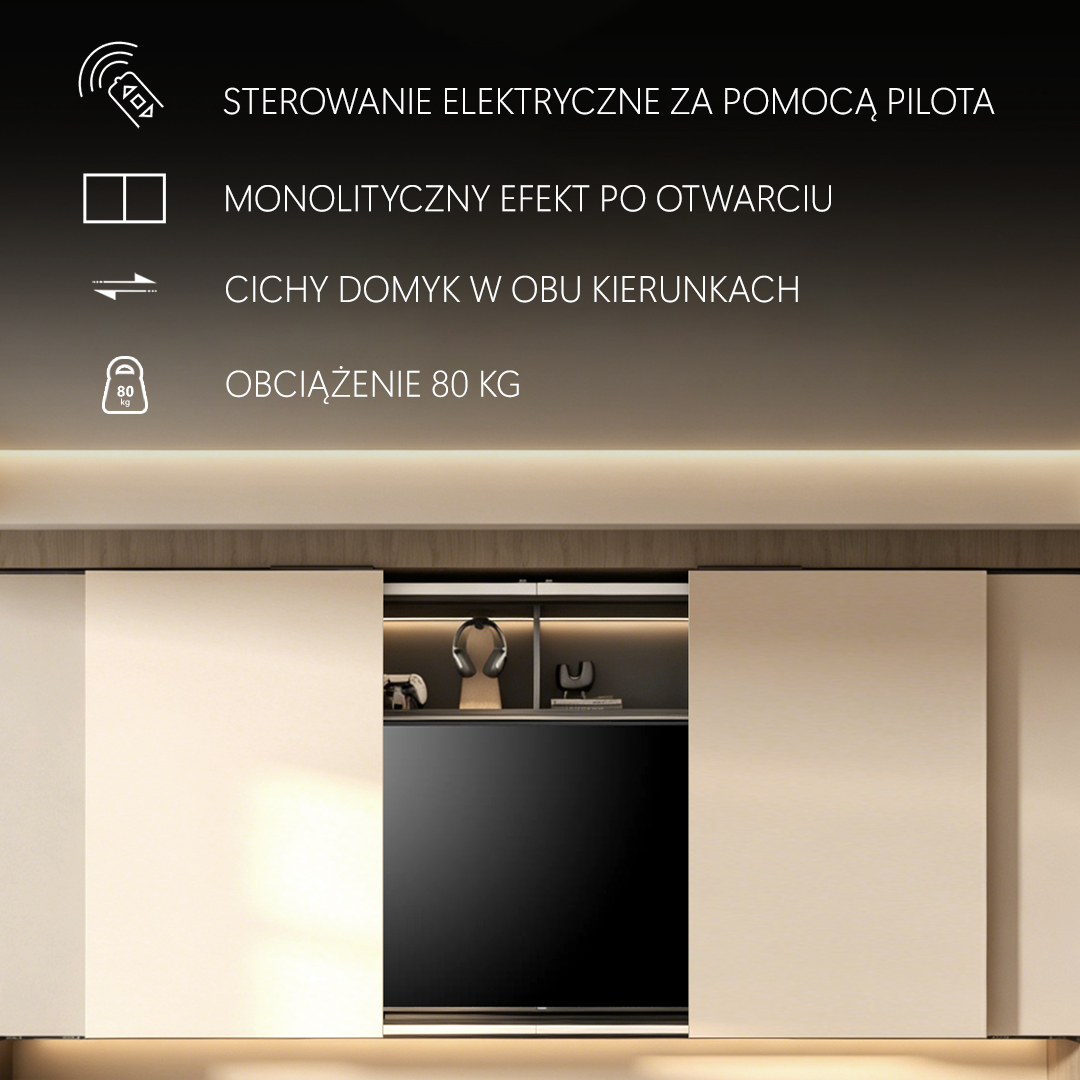
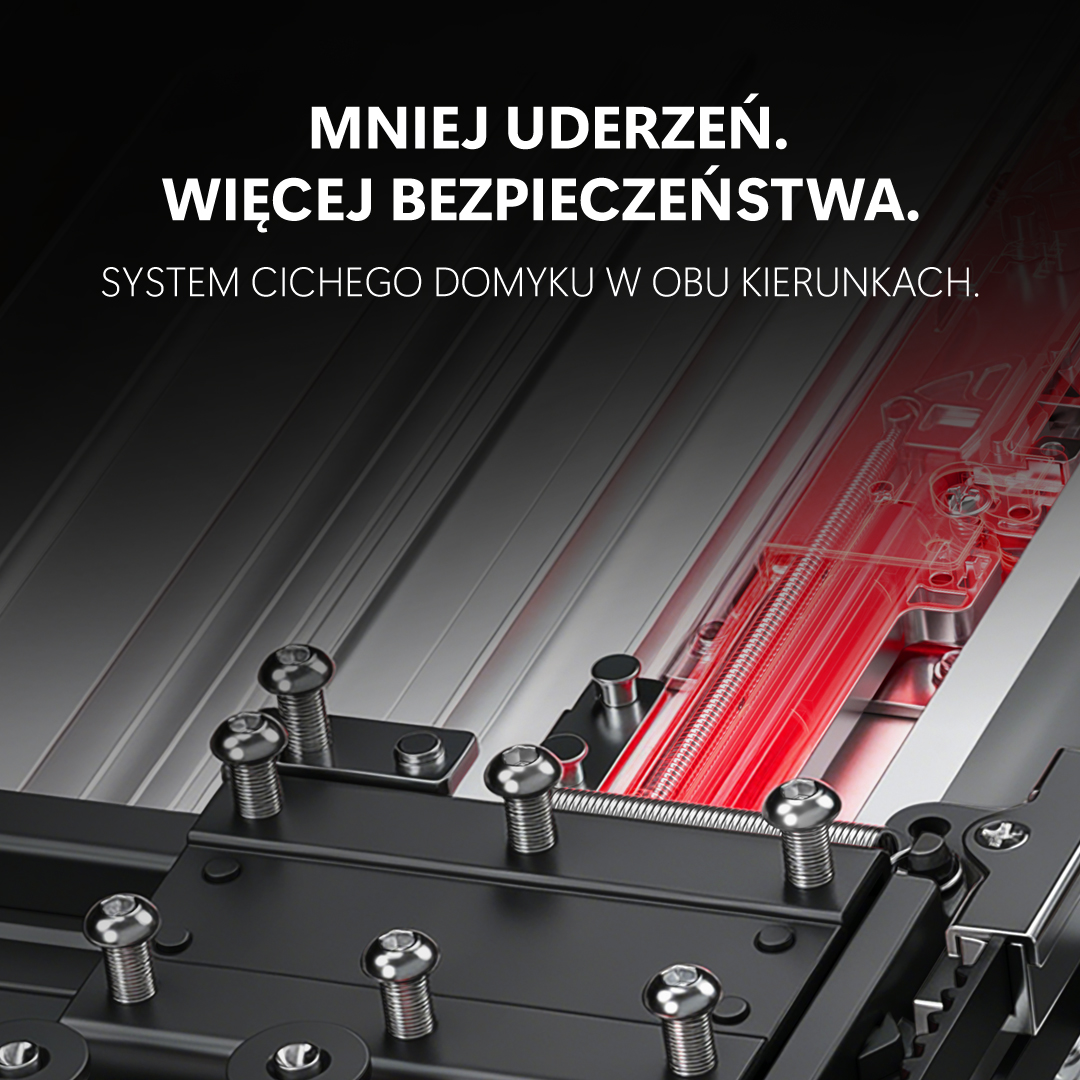
Najważniejszym wyróżnikiem systemu jest elektryczny mechanizm otwierania i zamykania drzwi. Lekkie dotknięcie frontu może uruchomić automatyczny, płynny i cichy ruch skrzydła – alternatywnie użytkownik może sterować zabudową za pomocą pilota. Oznacza to zupełnie inne doświadczenie korzystania z mebla – bez konieczności używania siły, szarpania czy wykonywania dodatkowych czynności. Elektryczne wspomaganie ma szczególne znaczenie w przypadku większych i cięższych frontów, których codzienne przesuwanie może wymagać większego wysiłku. HARMONY II przenosi ciężar tej czynności na mechanizm, zapewniając lekką i komfortową obsługę. Możliwość konfiguracji parametrów pracy pozwala dopasować sposób otwierania, zamykania oraz reakcję napędu do charakteru konkretnej zabudowy i oczekiwań użytkownika.
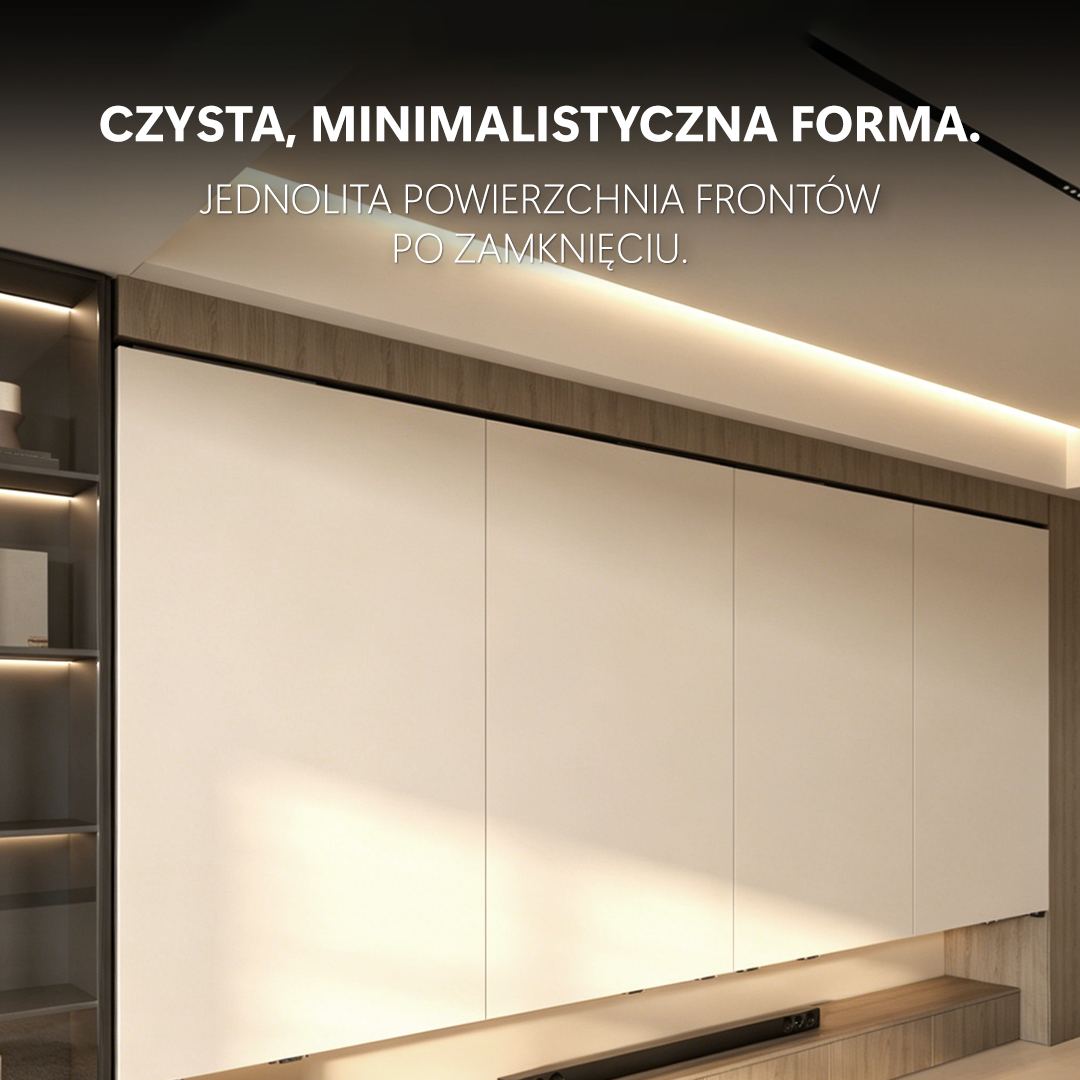
Jednocześnie cała technologia została podporządkowana estetyce. Po zamknięciu drzwi tworzą spójną, jednolitą płaszczyznę frontów, bez widocznych komponentów mechanicznych. Dzięki temu nawet zaawansowany elektryczny mechanizm pozostaje ukryty, a zabudowa zachowuje minimalistyczny i elegancki charakter. Projektant może skupić się na powierzchni frontów, ich materiale, kolorze i proporcjach, bez konieczności eksponowania technologii.
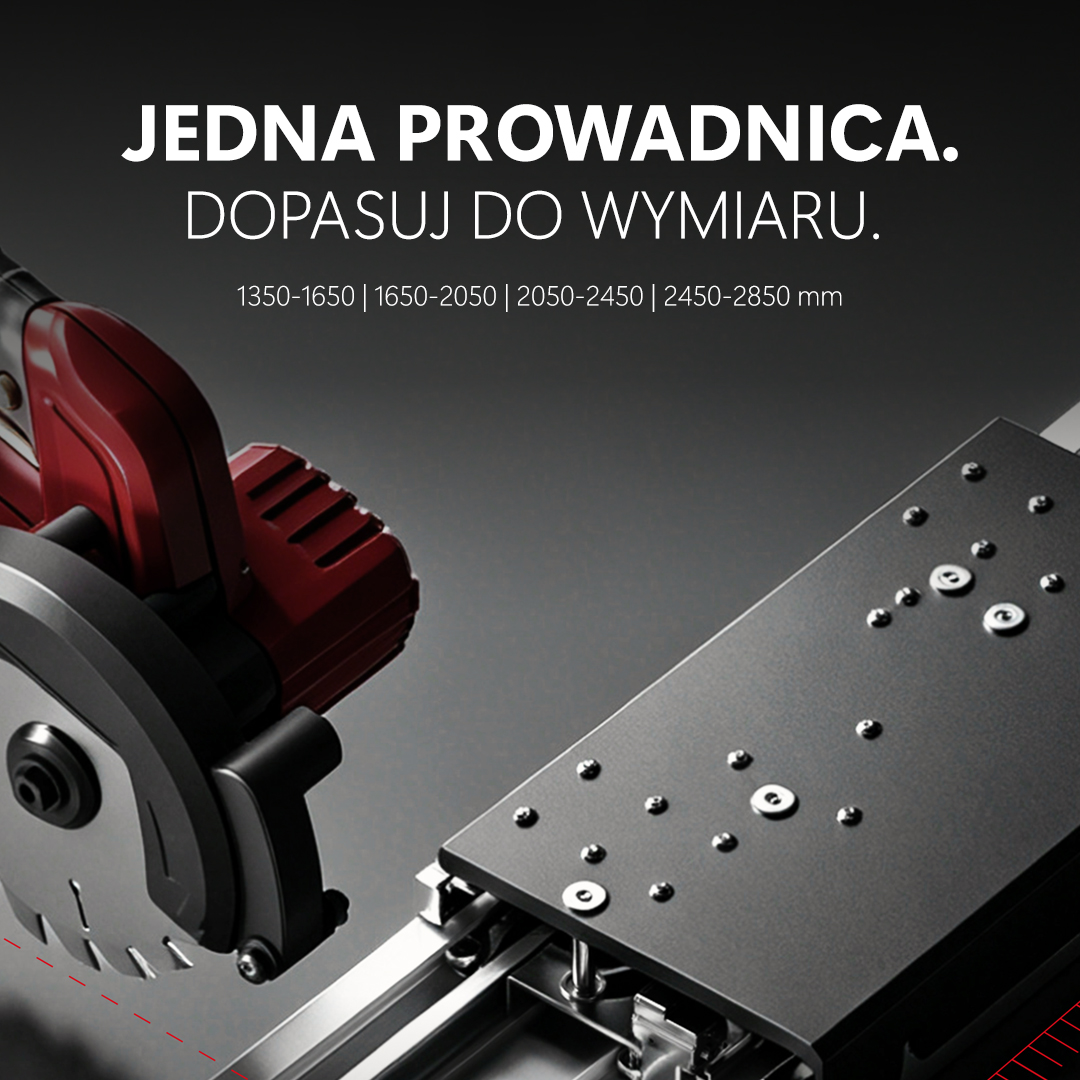
HARMONY II pozwala tym samym połączyć dwa pozornie różne kierunki projektowania: maksymalną prostotę wizualną i zaawansowaną technologię. Mebel może wyglądać estetycznie, a jednocześnie zapewniać funkcjonalność. System przeznaczony jest do drzwi o maksymalnym obciążeniu 80 kg, a długość prowadnicy może być indywidualnie dopasowana do szerokości zabudowy. Pozwala to projektować również większe i niestandardowe realizacje, zachowując stabilną oraz płynną pracę skrzydeł.
HARMONY II pokazuje, że przyszłość mebli może być elektryczna, a jednocześnie niemal niewidoczna. Użytkownik otrzymuje komfort automatycznego otwierania i zamykania, projektant – czystą, spójną formę, a technologia pozostaje ukryta wewnątrz konstrukcji.
HARMONY II ELECTRICAL SYSTEM
Contemporary interiors are increasingly incorporating solutions that not only meet functional needs but also enhance the comfort of everyday use. Automation is making its way into more and more areas of interior design, and furniture is becoming more intuitive, comfortable, and tailored to the user. HARMONY II combines these two trends – minimalist form and electric control of sliding doors.
The system’s most distinctive feature is its electric door opening and closing mechanism. A light touch on the front can trigger the automatic, smooth, and quiet movement of the door panel – alternatively, the user can control the unit using a remote control. This offers a completely different experience when using the furniture – without the need to exert force, jerk the door, or perform any additional actions. Electric assistance is particularly important for larger and heavier fronts, which can require more effort to slide on a daily basis. HARMONY II shifts the burden of this task to the mechanism, ensuring light and comfortable operation. The ability to configure operating parameters allows you to tailor the opening and closing methods, as well as the drive’s response, to the specific cabinet design and the user’s expectations.
At the same time, the entire technology is designed with aesthetics in mind. When closed, the doors form a cohesive, uniform surface of the cabinet fronts, with no visible mechanical components. As a result, even the advanced electric mechanism remains hidden, and the cabinetry retains its minimalist and elegant character. The designer can focus on the surface of the cabinet fronts – their material, color, and proportions – without having to highlight the technology.
HARMONY II thus allows for the combination of two seemingly different design approaches: maximum visual simplicity and advanced technology. The cabinet can look aesthetically pleasing while still providing functionality. The system is designed for doors with a maximum load of 80 kg, and the length of the guide rail can be individually adjusted to the width of the cabinet. This also allows for the design of larger and custom projects while maintaining stable and smooth operation of the doors.
HARMONY II demonstrates that the future of furniture can be electric and, at the same time, nearly invisible. The user enjoys the convenience of automatic opening and closing, the designer benefits from a clean, cohesive form, and the technology remains hidden within the structure.
innowacje